Bedding guide
How Wool Toppers Work with Traditional Spring Mattresses
A wool topper can soften the first impression of a traditional spring mattress, add a little cushioning, and create a distinct layer between you and the bed. But it cannot change the mattress’s underlying spring system—or bring worn-out support back to life. Here’s what to know about comfort, airflow, fit, and realistic expectations before adding one.
A new layer, not a new mattress
A traditional spring mattress is built around a support system made from metal coils. In an open-coil design, the springs are connected, so pressure in one area can influence neighboring springs. The mattress’s padding and upholstery sit above that system, shaping the feel of the surface. A wool mattress topper adds another layer on top of the finished mattress.
That distinction matters. A topper may make a bed feel plusher, less firm, or more comfortable against the body, depending on its construction and thickness. It can also add a little insulation or alter how the surface manages warmth and moisture. But it does not replace the mattress’s springs, correct a faulty foundation, or reverse sagging and structural wear.
Think of the mattress and topper as two parts with different jobs. The mattress provides the main support; the topper modifies the surface experience. When both layers are in reasonable condition and suited to one another, the combination can feel more comfortable. When the mattress beneath is failing, the topper may only soften the symptoms for a while.
What happens inside an open-coil mattress?
Open-coil mattresses use interconnected springs, often arranged in rows. Their construction can vary, but the shared feature is that the springs are linked rather than individually wrapped. When someone lies down, the coils compress under the load. The surrounding padding and upholstery help distribute pressure and determine how cushioned the surface feels.
Because the springs connect, movement can travel across a wider area than it typically does in a mattress with individually pocketed coils. That does not automatically make an open-coil mattress uncomfortable: surface padding, spring design, mattress condition, and the sleeper’s preferences all affect the experience. It does mean that a topper should be understood as a comfort layer, not as a way to turn one spring design into another.
Coils also leave spaces within the mattress structure. Air may move through those spaces, though the overall temperature experience depends on more than the springs alone. Upholstery, covers, bedroom conditions, bedding, and the sleeper’s own warmth all play a part. A wool topper can affect the feel of the surface without sealing the mattress in the way a thick, impermeable layer might. Still, no material guarantees that a particular sleeper will feel cool or warm.
What wool adds to the surface
Wool is used in bedding because its fibers have a naturally springy structure and can form a soft, cushioning layer. In a topper, wool may be arranged in a quilted cover, a filled pad, or another construction that keeps the fibers in place. The result can feel gently cushioned rather than deeply enveloping, although the exact sensation depends on the amount of wool, how it is held together, and how the topper is finished.
Wool can also interact with moisture in a way that contributes to a more comfortable bedding environment. It can take up some moisture vapor while still feeling relatively dry to the touch, but that should not be confused with waterproofing or unlimited moisture control. Regular airing and sensible care remain important, particularly in a bedroom where bedding is used night after night.
Another reason people consider wool is its balance of softness and resilience. Rather than feeling like a uniform block, a wool layer may compress under pressure and recover to some degree when the pressure is removed. Over time, however, natural filling can settle or become less lofty. A topper’s feel is not permanent, and its lifespan depends on its materials, construction, use, and care.
Wool toppers are not all alike. A thin pad may mainly change the immediate hand-feel of the bed, while a thicker or more generously filled one can create a more noticeable cushion. Read the construction details rather than relying on the word “wool” alone: the fill amount, quilting pattern, cover fabric, attachment method, and care instructions all matter.
Cushioning: how much difference should you expect?
The most noticeable change is often at the surface. If a sound spring mattress feels a little too firm, a wool topper may add gentle cushioning and reduce the stark impression of lying directly on a taut surface. It can soften contact around areas such as the shoulders or hips, but the degree of change is individual and cannot be predicted by material name alone.
A topper is not necessarily the right answer for every pressure or comfort concern. A thin wool layer may provide a subtle adjustment rather than a dramatic transformation. A thicker version may change the surface more, but it also raises the sleeping height and can affect the fit of sheets. If the mattress already feels too soft, adding another compressible layer may make the bed feel less stable rather than more comfortable.
Sleeping position, body shape, personal preference, and the condition of the mattress all influence how cushioning feels. Side sleepers may notice pressure at the shoulder and hip; back sleepers may pay closer attention to whether their lower back feels supported; stomach sleepers may prefer a firmer, less yielding surface. These are useful considerations, not rules that determine a perfect setup for everyone.
Comfort is also a whole-bed experience. The base, mattress, topper, sheets, and pillows interact. If you are adjusting one layer, give the arrangement time to assess under ordinary sleeping conditions. Notice whether you feel comfortable when settling in and when getting up, whether you shift position more than usual, and whether the bed still feels supportive across its surface.
A topper cannot repair worn springs
This is the expectation worth setting before anything else: a topper cannot repair a mattress that has sagging, broken coils, pronounced dips, or a failing edge. It can cover a surface and temporarily disguise minor unevenness, but the underlying problem remains. Adding cushioning over a dip may even make it harder to recognize that the support system needs attention.
Before shopping, examine the mattress without extra bedding. Look for visible sagging, uneven areas, damaged seams, a leaning or unstable frame, and changes in support that seem concentrated in one place. Check whether the bed sits on the foundation recommended for its design. A mattress can feel wrong because of a base or frame issue, so it is sensible to inspect the complete setup rather than blaming the top layer alone.
Some impressions are part of ordinary use, while deep, lasting indentations or sudden changes deserve closer attention. If the mattress has a warranty, consult its terms and the maker’s care instructions before attempting repairs or making assumptions about coverage. A topper may be a comfort accessory, but it is not a substitute for professional assessment when a bed is structurally damaged.
Fit is more than choosing the right size
A topper that shifts, bunches, or hangs awkwardly can undermine an otherwise promising comfort change. Start by measuring the mattress’s length and width rather than relying only on a size label. Also measure its depth, including any existing pillow-top or other surface layer. Mattress dimensions and profiles can vary, and a topper should sit evenly without overhanging the edges.
Consider how the topper stays in place. Some designs rely on their own weight and a fitted sheet; others use elastic straps, a skirt, or another fastening method. Check that the attachment suits the mattress profile and does not pull the topper unevenly. If the mattress is unusually deep or has a thick existing comfort layer, verify that your fitted sheet can accommodate the combined height.
Fit also affects everyday handling. A topper should be manageable to lift or reposition for airing and cleaning. If it is heavy or bulky, think through how you will care for it before choosing. Carefully follow its specific label: wool products may require different cleaning methods, and not every topper can be machine-washed or exposed to direct heat.
- Measure the mattress: check width, length, and depth, including existing padding.
- Check the sheet depth: allow room for the mattress and topper together.
- Review the attachment: make sure the topper is unlikely to slide or distort.
- Read care instructions: confirm that the recommended routine suits your household.
Airflow, warmth, and bedding layers
Open-coil construction is sometimes associated with airflow because the mattress contains spaces around its springs. Those spaces do not tell the whole story: upholstery and covers sit above them, while sheets, blankets, mattress protectors, and toppers affect the surface. A wool topper changes that surface layer, but it does not necessarily block the mattress’s internal airflow. The experience depends on the complete bedding combination.
Wool’s moisture-handling qualities may help some sleepers feel more comfortable, yet “breathable” does not mean temperature-neutral in every bedroom. Room temperature, humidity, pajamas, duvet weight, and individual heat sensitivity all matter. If a bed feels too warm, consider the whole setup before concluding that the topper alone is responsible. Lightweight sheets and a less insulating comforter may change the experience as much as a surface layer does.
Clean, dry bedding also helps preserve comfort. Air the bed when practical, follow product care labels, and avoid putting away a topper while it is damp. A protector can help guard the mattress from spills and everyday soil, but check that its material and fit do not create a surface feel you dislike. Layers should work together rather than simply accumulate.
Separate topper or wool built into the mattress?
Wool may be part of a mattress’s upholstery, or it may be added later as a separate topper. These are different arrangements. When wool is built into a mattress, it forms part of the maker’s intended construction. A separate topper offers a removable way to adjust the surface, though it can shift and needs its own care.
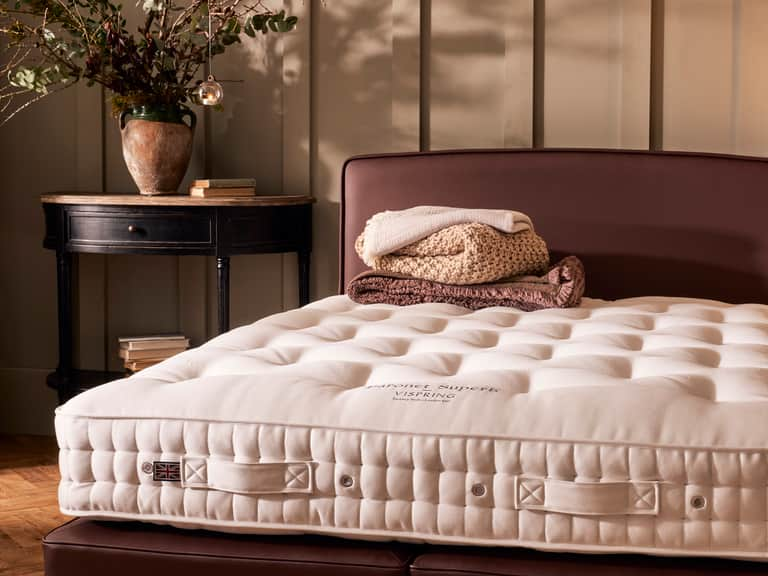
For instance, the Vispring Baronet Superb Mattress combines natural upholstery materials, including British fleece wool and cotton, with horsehair and hand-nested calico pocket springs. It illustrates how wool can be included as part of a spring mattress’s own upholstery. It is not a separate topper, and its construction should not be mistaken for a way to add wool to an existing open-coil bed.
That distinction can help when comparing options. A topper is more flexible if you want to alter the surface of a mattress you already own, but it cannot replicate a different mattress’s internal design. A mattress with wool in its upholstery is an integrated construction; whether it suits a sleeper depends on the full build, firmness, and personal comfort needs—not simply the presence of wool.
A practical way to decide
Start with the problem you are trying to solve. If the mattress is structurally sound but feels a little too firm or bare at the surface, a topper may be worth considering. If it sags, has broken springs, or no longer feels supportive, address the mattress or base first. If temperature is the concern, review all bedding layers and bedroom conditions rather than expecting one material to control the climate.
Next, think about the kind of change you want. Are you looking for a subtle softening or a more noticeable cushion? Do you prefer a natural-fiber layer that can be removed, or would you rather have materials integrated into the mattress? Will the added height make your sheets difficult to fit? Can you follow the care requirements? Clear answers help narrow the choice without assuming that a thicker topper is automatically better.
Where possible, check return terms and trial arrangements before buying. Comfort is subjective, and descriptions such as “plush,” “supportive,” or “temperature regulating” do not guarantee a specific result. An opportunity to assess the topper at home can be useful, provided you understand the conditions and care requirements.
Common misconceptions about wool toppers
- “A topper fixes a sagging mattress.” It can cover the surface, but it cannot restore worn springs or correct structural dips.
- “Wool always sleeps cool.” Wool can manage some moisture, but temperature depends on the sleeper, room, and entire bedding system.
- “All wool toppers feel the same.” Fill quantity, quilting, cover, and construction change the feel and performance.
- “A topper replaces a mattress protector.” A comfort layer and a protective barrier have different purposes. Check whether separate protection is appropriate.
- “More thickness means better support.” Thickness can change cushioning, but it does not determine whether the mattress underneath provides suitable support.
The bottom line
A wool mattress topper can be a considered way to adjust the surface of a traditional spring mattress, including an open-coil design. Depending on its construction, it may add gentle cushioning, contribute to moisture comfort, and create a softer layer between the sleeper and the mattress. The result depends on the topper, the bed beneath it, and the person sleeping on it.
Measure carefully, assess the mattress’s condition, and plan for the added height and care routine. Most importantly, keep the topper’s role in perspective: it can change how a sound mattress feels, but it cannot repair worn springs or replace the support system. With that distinction clear, it becomes easier to decide whether a wool layer is a sensible comfort adjustment—or whether the bed itself needs attention first.